YouTube sticks new labels on AI-generated songs
YouTube is rolling out “Made with AI” labels on tracks that use generative AI, starting with YouTube Music and expanding to the main app.
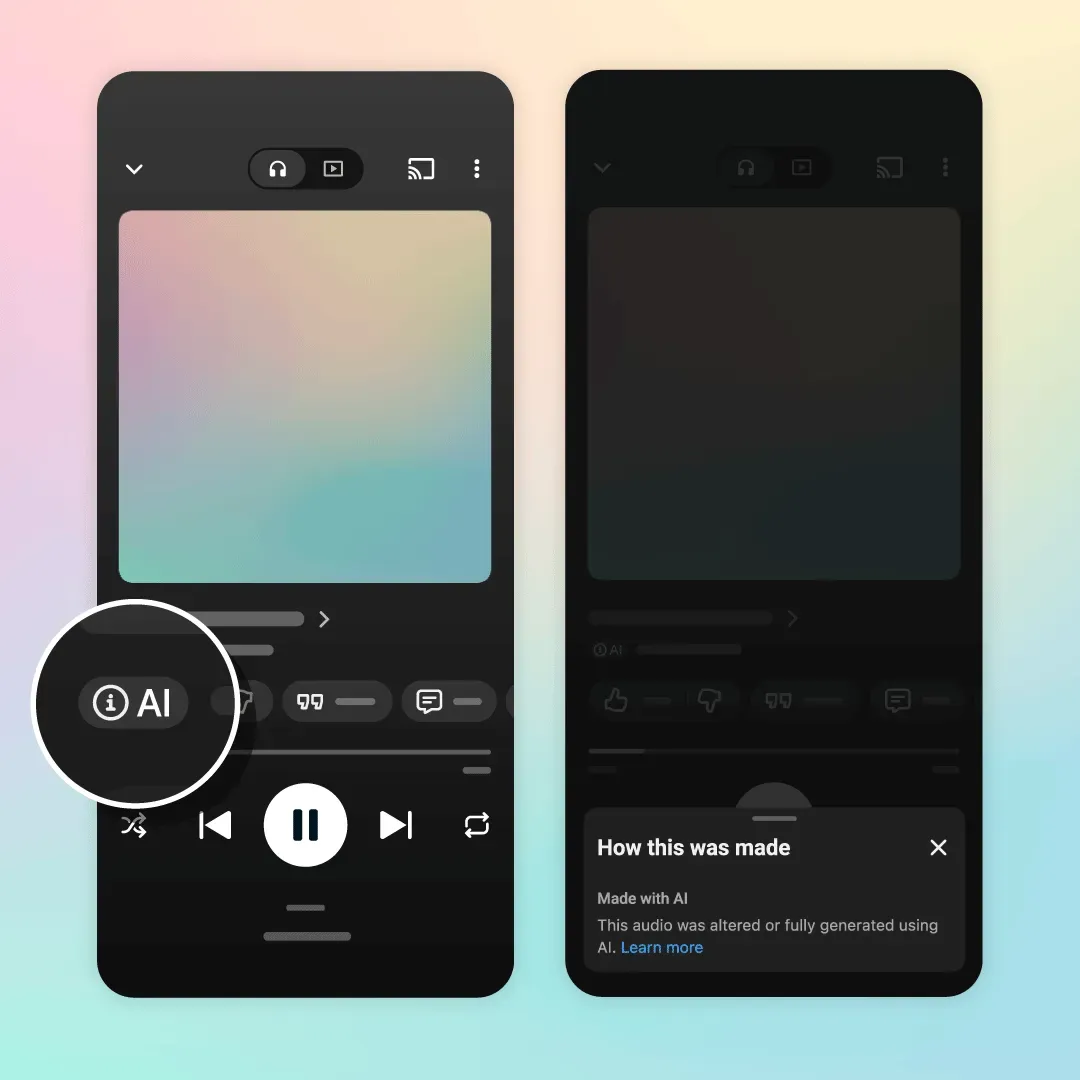
YouTube Adds “Made with AI” Labels to Music Tracks
YouTube announced a new labeling system that flags songs created or heavily altered with generative AI tools. The initiative, titled “Made with AI,” mirrors the platform’s existing AI labels for video content and aims to give listeners clear information about how a track was produced.
How the Labels Work
- Placement: When you play a song on YouTube Music that the platform identifies as AI‑generated, a small label appears directly on the player interface.
- Details on Tap: Tapping the label opens a concise menu that explains the role AI played—whether it generated the composition, vocals, or both.
- Detection: YouTube combines partner disclosures with its own detection algorithms. If a creator does not voluntarily disclose AI use, YouTube may rely on “other signals” to determine whether a track should be labeled.
- Rollout Timeline: The label is live today in the YouTube Music app and will expand to the broader YouTube app in the coming weeks.
Why the Change Matters
The music industry is grappling with a surge of AI‑generated content, from fully synthetic songs to hybrid tracks that blend human performance with machine‑crafted elements. By labeling these works, YouTube seeks to:
- Promote Transparency: Listeners can make informed choices about the origins of the music they enjoy.
- Support Creators: Artists who rely on AI as a tool can showcase their process, while those who prefer traditional methods can differentiate their work.
- Combat Misinformation: Clear labeling helps prevent confusion over authorship and reduces the risk of AI‑generated tracks being misrepresented as human‑made.
Industry Context
YouTube is not the first platform to address AI‑generated music. Earlier this year, Spotify introduced a voluntary AI label and announced it would not recommend songs from “AI personas.” Apple Music is reportedly testing a similar tag, while Deezer added a user‑controlled filter to hide AI tracks. Bandcamp took a more aggressive stance, outright banning AI‑generated music.
These varied approaches reflect a broader industry conversation about how to balance innovation with artistic integrity. Some creators embrace AI as a collaborative partner, while others worry about the dilution of human creativity and potential copyright challenges.
What Creators Need to Do
- Disclose AI Use: When uploading a track, follow YouTube’s updated partner guidelines to indicate whether AI was used and to what extent.
- Stay Informed: Keep an eye on YouTube’s detection criteria and any future policy tweaks, as the platform may refine its labeling based on feedback and evolving technology.
- Leverage the Label: If AI is a core part of your creative process, the label can serve as a marketing asset, signaling cutting‑edge production techniques to curious listeners.
Looking Ahead
YouTube’s labeling system is an early step in a rapidly evolving landscape. As generative models become more sophisticated, we can expect tighter integration of disclosure mechanisms across streaming services, social media, and content marketplaces. For now, the “Made with AI” label offers a practical way for both creators and audiences to navigate the new frontier of AI‑enhanced music.
---
The rollout begins today on YouTube Music and will expand to the main YouTube app shortly. Stay tuned for updates on how the label evolves and how other platforms respond.
Source
Read original sourceWhy we picked this
YouTube adds labels for AI‑generated music, showing AI integration in major platforms.