Trump posts AI-edited photo to brag about White House restoration work
Trump shared an AI‑altered before‑and‑after photo of a White House column, sparking questions about political use of synthetic media.
Introduction
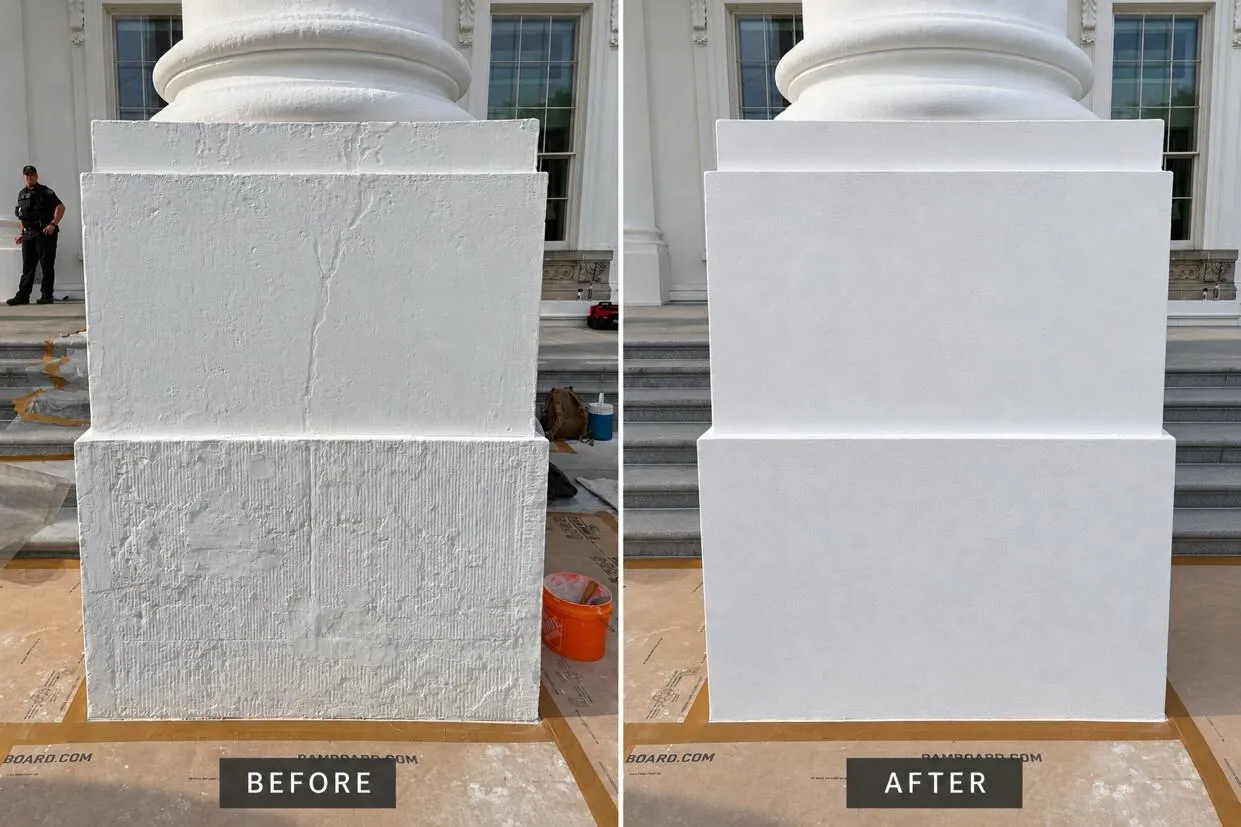
President Donald Trump recently posted a series of images on his Truth Social platform touting renovations at the White House. One of the pictures—a side‑by‑side comparison of an older column and a supposedly "restored" version—appears to have been manipulated with artificial intelligence. The image was flagged by Google’s SynthID detector, which identifies the invisible watermark that AI tools embed in generated content. This incident highlights how political figures can employ synthetic media to shape narratives and underscores the growing need for verification tools.
How the AI alteration was spotted
The altered photo shows a column that looks unusually smooth and features inconsistencies in the surrounding architecture. Observers noted that the number of steps flanking the column does not match between the "before" and "after" shots, and the reflections in nearby windows are nearly identical. A close inspection reveals that the protective cardboard at the base of the column occupies the same position in both images, suggesting a simple copy‑and‑paste edit rather than a genuine renovation.
When the image was uploaded to Google’s SynthID detector, the system reported that it contained a watermark indicating it was "made or edited with OpenAI" tools. Other images Trump posted—showing the White House façade and heliport—did not trigger the same warning, pointing to a specific manipulation rather than a blanket use of AI for all his posts.
Why political actors turn to AI‑generated visuals
Trump has a history of sharing AI‑generated content, from caricatures of himself to meme‑style images that push a particular narrative. Synthetic media offers several advantages for public figures:
- Speed and low cost: Creating a convincing visual can be done in minutes without hiring a photographer or graphic designer.
- Control over messaging: By tweaking images, politicians can emphasize achievements or downplay setbacks.
- Viral potential: Eye‑catching, polished visuals are more likely to be shared, amplifying the intended message.
However, the use of AI also carries risks. When alterations are discovered, they can erode credibility and fuel accusations of deception. In an era where deepfakes and AI‑enhanced imagery are increasingly sophisticated, audiences are becoming more skeptical and demanding transparency.
The broader implications for media literacy and verification
The Trump column photo serves as a case study for the challenges journalists, fact‑checkers, and the public face today:
- Detection tools are essential: Services like Google’s SynthID, Microsoft’s Video Authenticator, and open‑source models help identify hidden watermarks or anomalies.
- Context matters: Even when an image is flagged, understanding the surrounding narrative—such as the timing of actual White House painting work—provides crucial context.
- Education is key: Encouraging critical consumption of visual content, especially from political sources, can mitigate the spread of misinformation.
Media outlets are increasingly incorporating AI‑detection workflows into their reporting pipelines. By cross‑referencing official statements, on‑the‑ground photographs, and independent verification services, they can more accurately assess the authenticity of visual claims.
Closing thoughts
The AI‑edited White House column photo illustrates how synthetic media can be weaponized for political self‑promotion. While the technology enables rapid content creation, it also amplifies the responsibility of public figures to be transparent about their use of AI. As detection tools improve and media literacy initiatives expand, the hope is that audiences will be better equipped to discern genuine updates from digitally crafted narratives.
Source
Read original sourceWhy we picked this
AI relevance scoring was unavailable; retained a source-matched candidate for manual review.