Responsible infrastructure at hyperscale: Managing the full lifecycle of Azure hardware
Microsoft’s Circular Centers extend the life of Azure hardware through reuse, refurbishment, and recycling, boosting efficiency and sustainability across the cloud’s full lifecycle.
Responsible Infrastructure at Hyperscale
Microsoft’s Azure platform must constantly expand compute capacity while reducing its environmental footprint. Achieving that balance starts with designing denser, more power‑efficient servers and ends with responsibly handling the equipment that is retired. The company’s Circular Centers—now operating in North America, Europe, and Asia‑Pacific—play a pivotal role in turning decommissioned hardware into valuable assets, spare parts, or recyclable material, thereby extracting maximum value from every rack and every watt.
Designing for Density and Efficiency
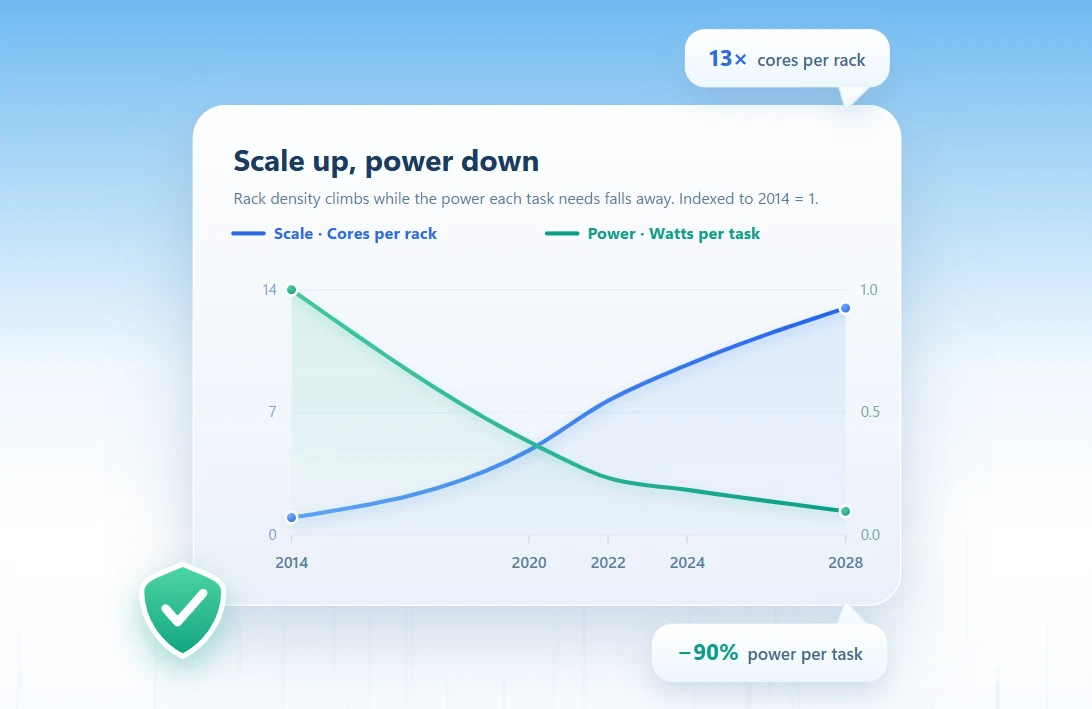
Modern Azure servers deliver dramatically more compute per square foot than early generations. Since 2014, the number of processor cores per rack has risen roughly 13‑fold, while the power needed to run the same workload has dropped by about 90 %. A task that once required 100 W can now be completed with under 10 W. This leap in density is driven by tightly integrated silicon‑to‑system designs such as the Azure Cobalt processors, which combine custom CPU, networking, storage, and security features to extract the most performance per watt.
Higher density means Azure can host more customer workloads without expanding the physical datacenter footprint. It also reduces cooling and electricity costs, directly translating into lower carbon emissions per unit of compute. The result is a virtuous cycle: newer hardware delivers more work with less energy, freeing capacity for the next wave of AI and cloud services.
The Circular Center Workflow
When a server reaches the end of its primary service life, it does not simply disappear into a landfill. Microsoft’s Circular Centers follow a structured, multi‑step process:
- Secure Decommissioning – All data‑bearing components are wiped and verified to meet security standards.
- Component Assessment – Processors, memory modules, and other parts are tested for functional integrity.
- Reuse Pathways – Fully functional systems may be repurposed for internal labs, training programs, or donated to educational institutions. Qualified buyers can also acquire refurbished units for continued use.
- Spare‑Part Harvesting – Viable components become inventory for maintaining existing Azure fleets, extending the operational life of active servers.
- Material Recovery – Parts that cannot be reused are sorted for recycling, feeding raw materials back into the supply chain.
In 2023, Microsoft reported a 92 % reuse‑or‑recycling rate for decommissioned hardware, a figure that reflects both the rigor of the process and the scale of the operation.
Automation and Global Scale
The Circular Center network now includes eight facilities, with recent openings in Newport, Wales, and Sydney, Australia, and a new site planned for San Antonio, Texas. To handle the massive volume of equipment, Microsoft is investing in AI‑driven automation: robotic disassembly stations, autonomous material‑handling carts, and machine‑learning models that predict the optimal next‑life pathway for each component. These technologies accelerate throughput while maintaining high accuracy in data sanitization and material sorting.
Why It Matters to Azure Customers
For business and IT decision‑makers, the circular approach translates into tangible benefits:
- Cost Efficiency – Reusing components reduces the need for fresh silicon purchases, lowering capital expenditures.
- Reliability – Spare‑part inventories sourced from refurbished hardware improve service‑level continuity.
- Sustainability – Higher reuse rates help Microsoft meet its Zero Waste and broader climate goals, aligning Azure with customers’ ESG commitments.
- Innovation Enablement – By freeing up datacenter space and power, circular practices support the rapid rollout of next‑generation AI infrastructure.
Looking Ahead
As demand for AI‑intensive workloads continues to surge, the importance of responsible hardware stewardship will only grow. Microsoft’s Circular Centers demonstrate that scaling cloud capacity and minimizing environmental impact are not mutually exclusive goals. By embedding reuse, refurbishment, and recycling into the core of Azure’s lifecycle, the company ensures that every new rack not only delivers more compute but also contributes to a more sustainable digital future.
For more information on Azure’s sustainability initiatives, explore the Microsoft 2026 Environmental Sustainability Report or take a virtual tour of a Circular Center.
Source
Read original sourceWhy we picked this
AI relevance scoring was unavailable; retained a source-matched candidate for manual review.