Microsoft’s new AI chip makes it less reliant on Nvidia’s GPUs
Microsoft’s third‑generation Maia 300 AI chip, slated for 2027 rollout, promises higher efficiency and token throughput, reducing the company’s reliance on Nvidia GPUs.
Introduction
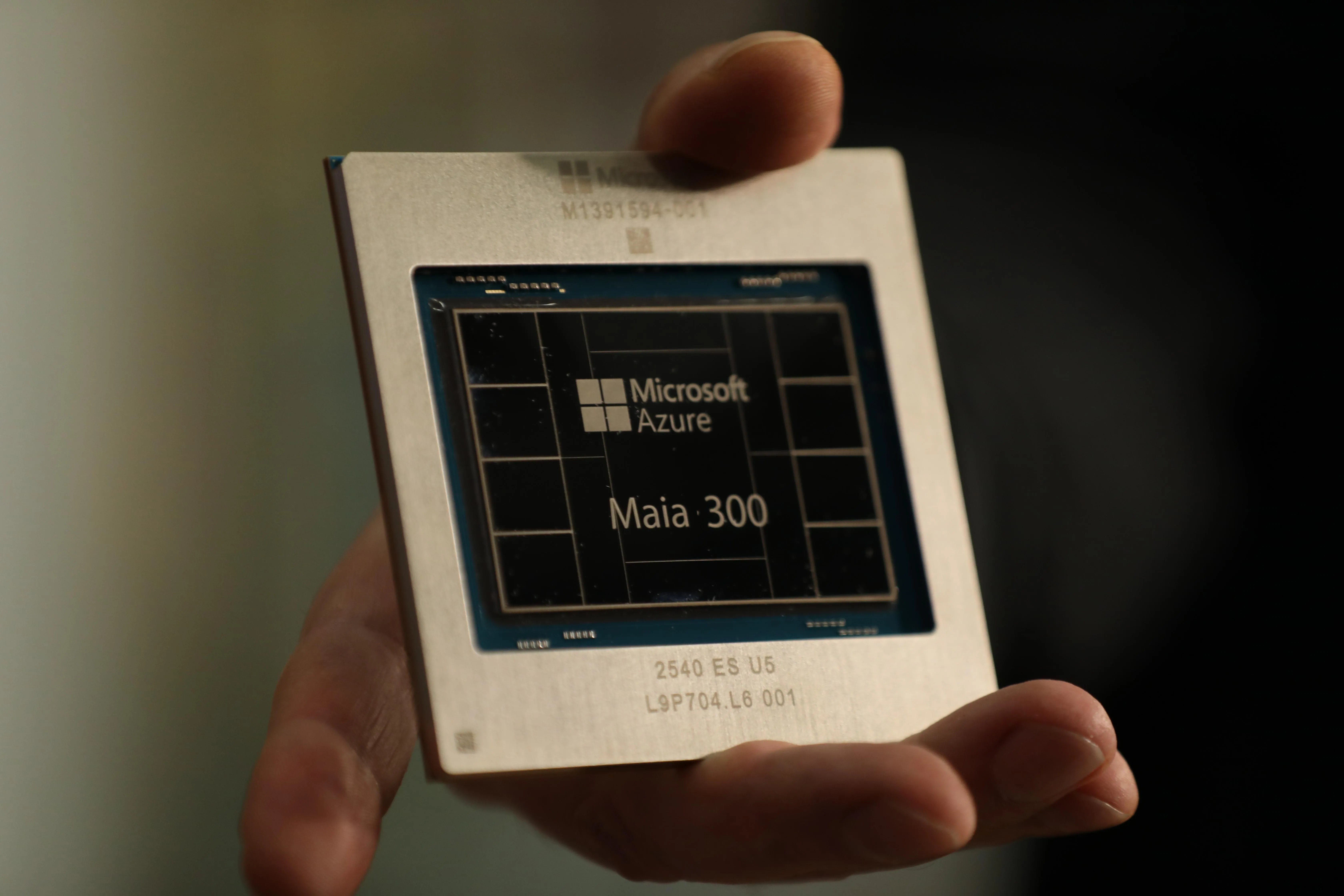
Microsoft announced its third‑generation in‑house AI accelerator, the Maia 300, positioning it as the primary inference engine for Azure and its suite of AI‑driven services. Building on the earlier Maia 200, the new chip is designed to improve efficiency, handle larger context models, and support latency‑sensitive workloads. By targeting a 2027 production rollout, Microsoft aims to shift a significant portion of its AI compute away from third‑party GPUs, chiefly those supplied by Nvidia.
Architecture and Efficiency Gains
The Maia 300 leverages a chiplet design fabricated on TSMC’s N2P process node. Compute, memory control, and I/O functions are separated into distinct modules, allowing each to use the most appropriate technology and maximizing silicon area dedicated to raw performance. According to Microsoft’s hardware team, this layout yields a 40 % increase in tokens processed per megawatt compared with leading GPU‑based systems. In a full 96‑accelerator rack configuration, the chip can deliver up to seven times the token throughput of its predecessor, the Maia 200.
Target Workloads and Deployment Timeline
Microsoft highlights three emerging workload categories that the Maia 300 is built to address:
- Long‑context reasoning – models that require extensive token windows for tasks such as document analysis and code generation.
- Latency‑sensitive conversational AI – real‑time chat and assistant experiences where response time is critical.
- Sustained multi‑step agentic tasks – complex pipelines that involve multiple inference steps and continuous interaction with external tools.
The company plans to begin rolling the chip out to production AI workloads in 2027, scaling to multi‑gigawatt deployments across Azure data centers. Existing services that already run on Maia 200, such as Microsoft Copilot, GitHub Copilot, and internal AI models, will transition to the newer silicon as it becomes available.
Strategic Implications
By developing a custom inference platform, Microsoft reduces its dependence on external GPU vendors and gains tighter integration between hardware and its AI models. This vertical integration mirrors moves by other cloud providers seeking to control cost, performance, and supply‑chain risk. The efficiency improvements promised by Maia 300 could translate into lower operational expenses for Azure customers and potentially more competitive pricing for AI services.
Outlook
The Maia 300 represents a significant step in Microsoft’s broader strategy to own more of the AI stack, from model development to the silicon that runs them. While the chip’s real‑world performance will only be verifiable after its 2027 deployment, the announced architectural choices suggest a focus on scalability and energy efficiency—key factors as AI workloads continue to grow in size and complexity. For developers and enterprises relying on Azure’s AI capabilities, the rollout of Maia 300 may offer a new option for high‑throughput, low‑latency inference without the need to source third‑party GPUs.
--- This article provides an overview of Microsoft’s upcoming Maia 300 AI chip based on the information released in the company’s announcement. No external quotations or unpublished data have been added.
Source
Read original sourceWhy we picked this
Major AI hardware release impacting AI workloads