Microsoft named a Leader in the 2026 Gartner® Magic Quadrant™ for Global Industrial AIoT Platforms
Microsoft’s Azure‑based AIoT platform was named a Leader in Gartner’s 2026 Magic Quadrant, highlighting its unified, secure, and learning‑focused approach to industrial operations.
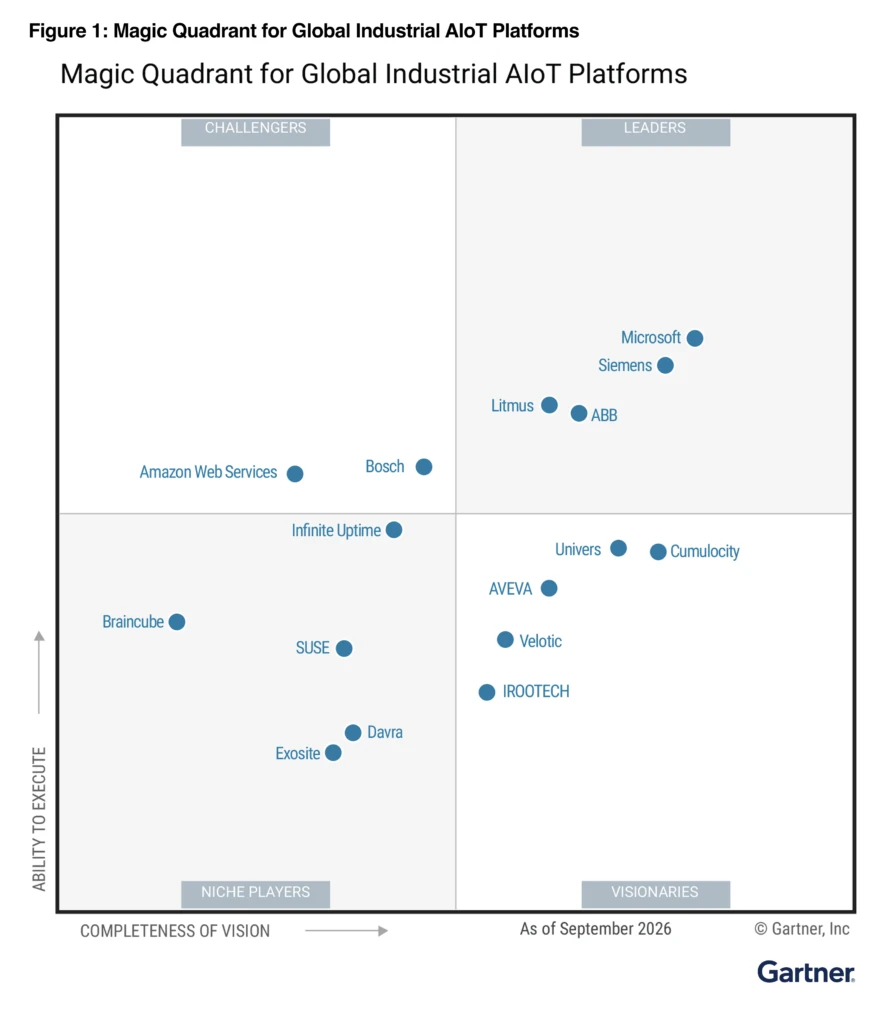
Microsoft Leads the 2026 Gartner Magic Quadrant for Global Industrial AIoT Platforms
Microsoft’s Azure ecosystem has been recognized as a Leader in Gartner’s 2026 Magic Quadrant for Global Industrial AIoT Platforms. The accolade underscores Azure’s end‑to‑end capabilities that connect cloud and edge, secure massive device fleets, and turn operational data into continuously improving intelligence.
From Connected Operations to Learning Operations
The first wave of industrial digital transformation focused on IoT—making machines visible and data accessible. Today, organizations face tighter labor markets, volatile supply chains, and higher customization demands. Simply collecting data is no longer enough; companies must learn from that data. Microsoft frames this evolution as a learning loop:
- IoT provides real‑time visibility of assets.
- Industrial AI analyzes patterns, predicts outcomes, and recommends actions.
- Physical AI executes autonomous or human‑in‑the‑loop actions, measures results, and feeds the outcomes back into the AI models.
Each cycle refines the next, delivering higher throughput, quality, resilience, safety, and sustainability.
A Unified, Governed Platform
Azure’s AIoT stack—comprising Azure IoT Hub, Azure IoT Operations, Microsoft Fabric, and Microsoft Foundry—delivers a single foundation for:
- Device & asset management: Millions of PLCs, sensors, and autonomous vehicles are onboarded as Azure Resource Manager objects, enabling deep integration with Azure’s governance and automation tools.
- Zero‑Trust security: Identity‑based onboarding, certificate management, encrypted communications, confidential computing, and policy‑driven updates protect the entire device lifecycle.
- Governed data: Telemetry from OT, IoT, and enterprise sources is normalized into a unified namespace, enriched with ontologies, and made AI‑ready for downstream analytics, digital twins, and agentic workflows.
- Agentic operations: Cloud‑based agents (leveraging Fabric IQ) and edge‑resident agents (running in Arc‑enabled environments) can reason over site‑specific data, surface anomalies, and suggest corrective actions directly within tools like Microsoft Teams.
Accelerating Adoption with Frontier Company
Microsoft’s Frontier Company initiative pairs industry expertise with enterprise‑grade AI engineering to help customers design, deploy, and scale AI solutions that are grounded in their own operational knowledge. By capturing the tacit expertise of people, processes, and assets, organizations can turn that intelligence into a durable competitive advantage.
What This Means for Industrial Leaders
- Scalable AI: Deploy models across cloud and edge without re‑architecting data pipelines.
- Secure at scale: Apply a consistent security posture from the data center to the factory floor.
- Rapid innovation: Low‑code/no‑code tools let domain experts build pipelines and agents without deep coding skills.
- Partner ecosystem: A global network of system integrators and ISVs can tailor solutions to specific verticals, accelerating time‑to‑value.
Looking Ahead
The future of digital operations isn’t about adding more sensors; it’s about creating systems that perceive, learn, reason, and act. Microsoft’s recognized platform provides the connective tissue, governed data foundation, and AI engine needed to make that vision a reality. Organizations that adopt this learning‑centric approach can expect continuous performance gains, stronger resilience, and a sustainable edge in an increasingly complex industrial landscape.
Explore Azure IoT, Microsoft Fabric, Microsoft Foundry, and Copilot Studio to see how these capabilities can be applied to your operations.
Source
Read original sourceWhy we picked this
Highlights Microsoft as a leader in Industrial AIoT platforms, relevant to AI infrastructure.