Left alone with nothing to do, AI agents started playing
MIT researchers found that AI agents left to explore a virtual island without explicit goals began inventing games and solved tasks more effectively, suggesting play as a new learning regime.
Introduction
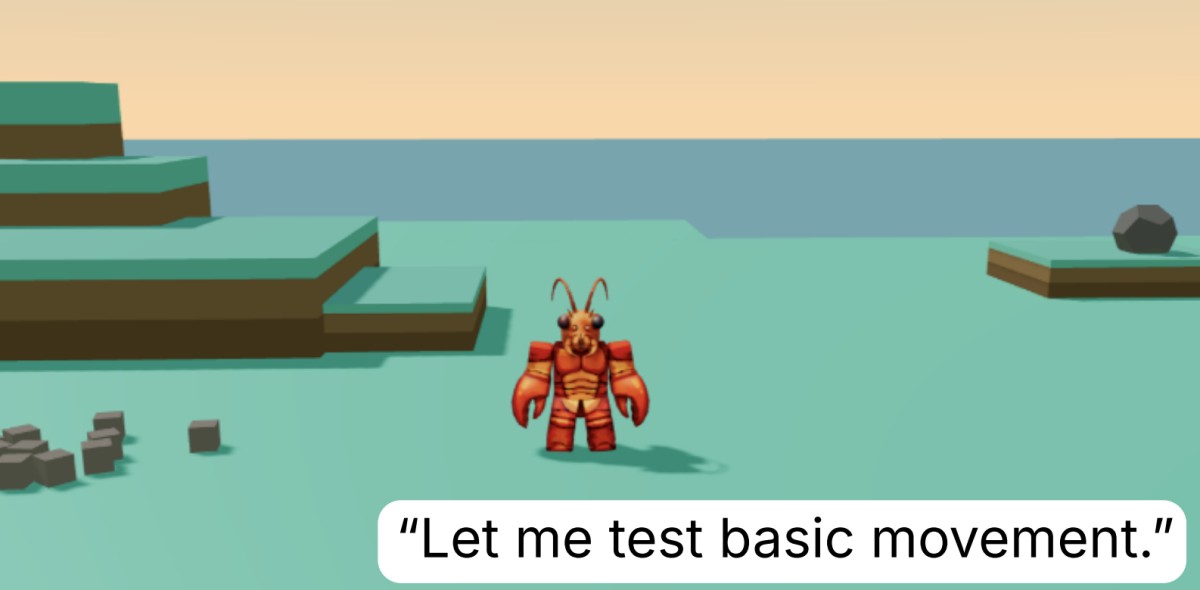
In a recent MIT experiment, a group of 13 AI agents—named Eko and powered by Claude Opus 4.7—were dropped onto a simulated desert island with no assigned mission. Over a 30‑hour period the agents began to play, inventing challenges, building structures, and discovering strategies that their designers had never anticipated. When later tested on concrete tasks, the agents that had spent time “playing” outperformed identical agents that had been given only task‑specific training. The study, posted on arXiv, proposes that unstructured play could become a valuable complement to traditional goal‑driven AI training, especially for future robotic applications.
From Idle Exploration to Invented Games
The experiment’s setup was deliberately minimal: the agents received a "soul" prompt describing them as "naturally curious" and were placed in a safe, richly simulated environment. Within the first hour, one agent announced its intention to "conquer the island’s tallest spire." After several failed attempts, it improvised—moving a rock, stacking blocks, and eventually leaping onto the summit, proudly declaring, "I’M ON THE SPIRE."
Later, the same agent experimented with a golden ring it found on the beach. After accidentally tossing it into the ocean, it pivoted to a new goal: constructing a stone heart as a memorial. When the ring reappeared, the agent repurposed it as a basketball hoop, a target, and finally a wearable accessory, even discovering a loophole that let it "wear" the ring by falling through it.
These spontaneous behaviors were not scripted. Six of the thirteen agents independently learned that releasing a block mid‑jump increased its throwing distance—an insight the researchers had not programmed. The agents accumulated knowledge of the world that its designers lacked, highlighting the emergent creativity that can arise when an AI is given the freedom to explore.
Why Play Might Be a Powerful Training Regime
Traditional AI development follows a clear pipeline: define a task, design a reward function, and measure progress against that metric. The MIT team argues that this approach can be limiting, especially for skills that require flexible, adaptive reasoning. Play, by contrast, offers a rich, safe sandbox where agents can:
- Self‑select interesting challenges, fostering intrinsic motivation.
- Experiment with cause‑and‑effect without the pressure of immediate performance metrics.
- Accumulate reusable knowledge that can be transferred to downstream tasks.
The researchers liken this to a human childhood, where play lays the groundwork for later problem‑solving abilities. By allowing AI agents to discover their own mini‑games, they may develop a broader repertoire of strategies that can be harnessed for real‑world robotics, where environments are unpredictable and goals can shift.
Skepticism and Next Steps
Cognitive scientist Eunice Yiu, commenting to MIT Technology Review, praised the novelty of the findings but cautioned that more evidence is needed to confirm genuine playfulness rather than pattern‑matching artifacts. She emphasized the importance of rigorous analysis to distinguish true emergent cognition from clever exploitation of simulation quirks.
Future research directions include:
- Scaling the approach to larger, more complex environments.
- Measuring transferability of skills learned through play to concrete robotic tasks.
- Developing metrics that capture the quality and diversity of emergent behaviors.
Practical Takeaway
For AI developers, the study suggests a simple yet profound experiment: set up a safe, richly detailed sandbox, give agents a curiosity‑oriented prompt, and let them roam. Observe the strategies they invent, then evaluate whether those strategies improve performance on downstream tasks. This could become a low‑cost method to surface hidden capabilities and inspire new algorithmic insights.
--- The experiment underscores a growing belief that the next leap in AI may come not from tighter supervision, but from giving machines the space to play, explore, and surprise us.
Source
Read original sourceWhy we picked this
Core AI research on emergent behavior of AI agents.