Introducing SynthID Bio
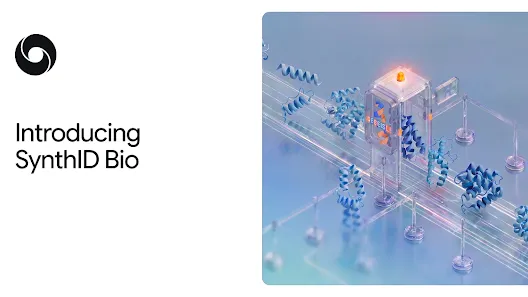
SynthID Bio embeds imperceptible watermarks into AI‑designed proteins and structures, enabling verification of origin without harming biological function.
Introduction
Synthetic biology is being transformed by generative AI tools that can design proteins, binders, and even entire genomes. While these advances accelerate discovery, they also raise biosecurity concerns: novel sequences can evade traditional DNA‑synthesis screening, and mislabeled entries can corrupt public databases. SynthID Bio is a new family of watermarking methods that embeds an invisible signature directly into the biological code—both the amino‑acid sequence and the predicted 3D coordinates—so that the watermark can be detected on the physical molecule while preserving its function.
How SynthID Bio Works
SynthID Bio adapts its technique to the data type it protects:
- Sequence watermarking subtly nudges the choice of amino acids during generation (e.g., via ProteinMPNN or AlphaProteo) to encode a deterministic pattern. The changes are small enough that binding affinity, stability, and diversity remain indistinguishable from unwatermarked designs.
- Structure watermarking fine‑tunes a narrow slice of AlphaFold 3’s diffusion network, causing the predicted atomic coordinates to carry a detectable signal regardless of who runs the model. The approach retains AlphaFold 3’s accuracy and resists minor coordinate perturbations.
In laboratory tests on three protein binders—VEGF‑A, the SARS‑CoV‑2 spike RBD, and PD‑L1—watermarked versions matched the hit rate, KD values, and sequence diversity of their non‑watermarked counterparts, demonstrating that the watermark does not compromise function.
Strengthening Biosecurity and Data Integrity
The watermark provides a tangible verification layer that can be used at several critical checkpoints:
- DNA‑synthesis screening – Providers can automatically flag orders that contain a SynthID Bio signature, confirming they originated from a trusted, screened model. This reduces the need for exhaustive manual review of novel sequences.
- Database provenance – Public repositories such as the Protein Data Bank, UniProt, and GenBank could require a watermark tag on AI‑generated entries, helping curators detect mislabeled or potentially hazardous submissions.
- Supply‑chain traceability – Researchers and clinicians receiving a synthesized protein can verify its provenance, ensuring that the material was produced under approved safety protocols.
Experts quoted in the announcement highlight the practical impact: policy analysts see the watermark as a “verification layer embedded in the design itself,” while synthesis companies view it as a tool that can focus screening resources on truly risky orders.
Looking Ahead
SynthID Bio is an early step toward robust bio‑security tooling for AI‑driven biology. Ongoing work aims to:
- Increase robustness against deliberate tampering or adaptive attacks.
- Integrate provenance metadata similar to C2PA for digital media, creating a full audit trail for AI‑generated biological assets.
- Extend watermarking to larger constructs, such as whole genomes or engineered bacteriophages, as demonstrated in preliminary tests with Evo 2‑designed phages.
The research team is open‑sourcing the code, in‑vitro data, and model weights to encourage community collaboration. Partnerships with synthesis firms, bio‑security agencies, and policy groups are invited to refine standards and deployment practices.
Practical Takeaway
For labs adopting generative protein design, incorporating SynthID Bio can:
- Provide an automated, low‑overhead check that designs are traceable to vetted AI models.
- Preserve experimental outcomes by ensuring no loss of function.
- Help meet emerging regulatory expectations around AI‑generated biological materials.
Stakeholders interested in piloting the technology or contributing to its evolution should reach out via the provided contact address. By embedding provenance directly into the molecules we create, SynthID Bio offers a concrete way to keep the pace of innovation aligned with safety.
Source
Read original sourceWhy we picked this
Introduces SynthID Bio, a novel AI watermarking technique for protein design.