Infrastructure for the frontier era: Scaling intelligence through open industry collaboration
Open industry collaboration is driving the next‑generation Azure infrastructure that scales AI with more efficient silicon, networking, power, cooling, and security.
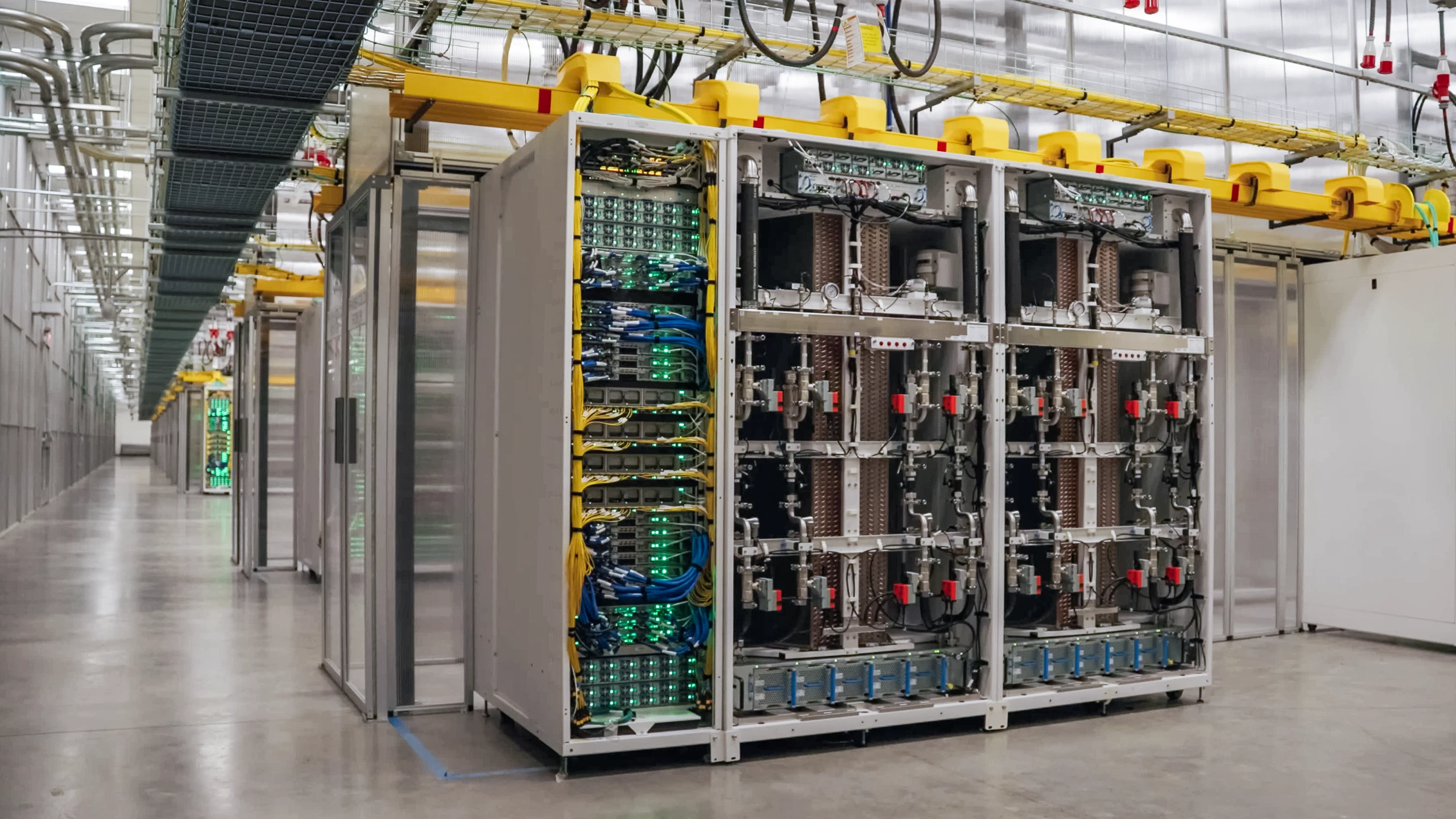
Scaling Intelligence Through Open Collaboration
Microsoft’s vision of a Frontier Firm—where human expertise and advanced technology co‑evolve—requires a new class of infrastructure. By partnering with the Open Compute Project (OCP) and other ecosystem players, Azure is building a unified engine that makes artificial intelligence more available, reliable, and sustainable across sectors such as science, healthcare, education, and the broader economy.
Co‑Designing Silicon for Real‑World Workloads
The rise of inference‑heavy AI workloads has shifted the performance focus from raw GPU power to efficiency, latency, and cost. Azure’s Maia 300 accelerator exemplifies a system‑level co‑design approach: it integrates custom silicon, model kernels, communication libraries, and production workloads into a single optimization loop. Early results suggest a 40 % improvement in tokens‑per‑watt over leading GPU solutions, and a 96‑accelerator rack can deliver up to seven times the throughput of its predecessor, Maia 200.
Agentic AI places new demands on CPUs. Microsoft’s Cobalt 200 CPU, built for agent‑native workloads, offers a 50 % performance boost over Cobalt 100 and cuts call latency by a third, while increasing overall throughput by 23 %. Together, Maia and Cobalt illustrate how tightly coupled hardware and software can meet the nuanced needs of modern AI services such as Teams, Copilot, and autonomous agents.
Open, Resilient Networking Fabric
Scalable AI also depends on high‑bandwidth, low‑latency interconnects. Microsoft’s Multipath Reliable Connection (MRC) re‑imagines Ethernet for AI, using a multi‑plane architecture that can support over 100,000 GPUs while reducing power consumption and failure points. Parallel efforts like the Optical Compute Interconnect Multi‑Source Agreement (OCI MSA) and the Ethernet for Scale‑Up Networking (ESUN) workstream bring multi‑vendor, optical specifications to market, ensuring that the networking layer can grow alongside compute.
Power and Cooling for the Frontier Era
AI’s energy demands are prompting a fundamental redesign of datacenter power delivery. Through OCP’s 800 VDC initiative, Microsoft introduced the Mt. Diablo disaggregated power architecture, separating conversion from compute racks and supporting modular scaling from 100 kW to beyond 1 MW. Complementary work on solid‑state transformers and open backup‑power specifications aims to reduce reliance on diesel generators and improve overall efficiency.
Cooling is treated as a first‑class design constraint. The third‑generation Azure Heat Exchanger Unit (Mt. Atlas) nearly doubles cooling capacity without expanding the footprint. A zonal cooling strategy—employing multiple independent water loops at different temperatures—optimizes thermal management for mixed liquid‑cooled accelerators and traditional air‑cooled servers, aligning with Microsoft’s carbon‑reduction goals.
Open Hardware Security
Security at scale requires openness. Microsoft’s participation in the Confidential Computing Consortium, the open‑source Caliptra root of trust, and contributions to the OCP S.A.F.E. framework demonstrate a commitment to transparent hardware security. Building on this foundation, Microsoft, Marvell, and Oracle have launched Tessera Integrated HSM, an open‑source hardware security module that publishes architecture, specifications, drivers, and firmware for community adoption.
Fleet Resiliency and Diagnostics
As AI fleets expand, reliability becomes paramount. Microsoft has released common specifications for reliability, availability, and serviceability (RAS), debugging, telemetry, and diagnostics through OCP. Leveraging years of fleet data and AI‑driven validation, the company is standardizing fault management across CPUs, GPUs, and memory subsystems, helping customers maintain consistent service quality at scale.
---
Practical Takeaway
Enterprises looking to adopt frontier AI should evaluate providers that embrace open collaboration across silicon, networking, power, cooling, and security. Microsoft Azure’s ecosystem‑driven approach offers a roadmap for building scalable, efficient, and trustworthy AI infrastructure—one that can evolve alongside the rapidly changing demands of intelligent workloads.
Source
Read original sourceWhy we picked this
Discusses scaling intelligence and AI model impact, core AI content.