Industrial Intelligence: The next growth opportunity for manufacturing
Industrial intelligence combines human expertise, data, and physical AI to turn manufacturing knowledge into scalable, growth‑driving action.
Introduction
Manufacturers have long relied on the tacit knowledge of experienced operators, detailed procedures, and production data to keep factories running. That blend of know‑how, often called industrial intelligence, is now being amplified by physical AI—systems that can perceive, reason, and act in the physical world. By linking business intelligence directly to machines and processes, manufacturers can turn isolated expertise into a shared, actionable asset that fuels productivity, innovation, and sustainable growth.
Extending Individual Knowledge Across the Organization
The value of an operator’s judgment is limited when it stays confined to a single shift or plant. Modern manufacturers must capture that expertise—equipment settings, material quirks, and contextual decisions—and make it accessible to engineers, planners, and maintenance crews. When an engineer evaluates a process change, they need more than a raw production record; they need the surrounding story: why a particular setting was chosen, what trade‑offs were made, and how quality requirements were met. By aggregating this context into a searchable knowledge base, organizations enable cross‑functional teams to reuse insights, accelerate problem‑solving, and spread innovation beyond its point of origin.
Physical AI: Turning Insight Into Action
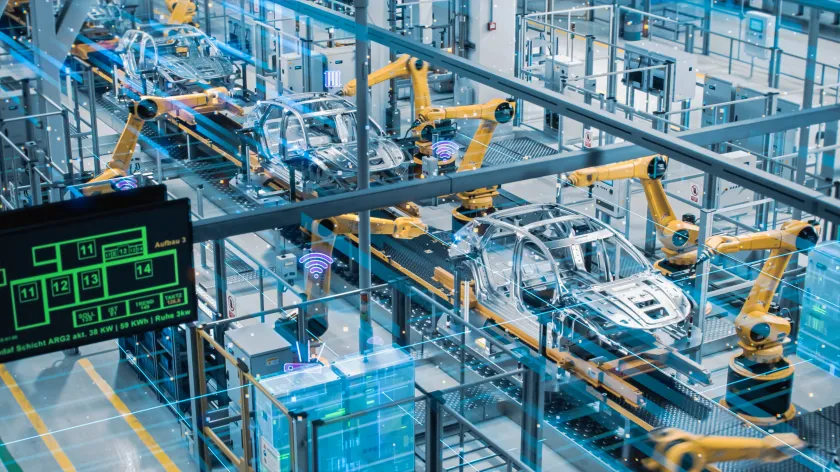
Physical AI adds a new layer to industrial intelligence by allowing machines to act on the knowledge they receive. Sensors feed real‑time conditions to AI models that can detect anomalies, predict failures, and recommend adjustments. For example, a robotic handling cell equipped with vision can assess part orientation, consult a material‑specific model, and automatically tweak its motion within validated limits. The benefit is not merely visibility of variation but a coordinated response that keeps production on target.
A concrete illustration comes from a paint‑shop integration project where fragmented data was unified, giving engineers a clear view of defect drivers. Analysis time dropped from days to hours, and defect rates fell by roughly a quarter. The breakthrough was not the extra data point, but the contextual understanding that enabled timely, informed action.
Building Trust Through Discipline and Human Oversight
Deploying physical AI responsibly requires clear operational guardrails. Leaders must define which systems can modify equipment, establish reliable communication pathways, and set safety boundaries that prevent unintended actions. A transparent record of decisions and outcomes helps both humans and AI learn from each interaction. Crucially, humans must retain the ability to recognize uncertainty, intervene when needed, and bring equipment to a safe state. Trust in the system stems from these practical safeguards, not from blind confidence in a model.
Empowering People and Machines Together
Physical AI does not aim to replace human expertise; it seeks to augment it. Intelligent equipment can take on repetitive or physically demanding tasks, while AI‑assisted interfaces guide workers through complex, information‑heavy decisions. At a Singapore plant, a maintenance copilot that blends machine data, manuals, and captured worker knowledge reduced onboarding time for new technicians from nine months to three. Engineers can explore more process alternatives in simulation before committing to changes, and operators can provide feedback that refines system responses.
Conclusion: Industrial Intelligence as a Growth Engine
Industrial intelligence unites three pillars—human experience, operational data, and physical AI—to create a feedback loop where knowledge becomes decisions and decisions become action. This loop enables manufacturers to scale capability without proportionally increasing complexity: productivity rises, innovation accelerates, capacity expands, and workers solve problems that were previously out of reach. The next frontier for manufacturing is not simply more automation, but an ecosystem that continuously learns, adapts, and acts, turning every piece of operational know‑how into a compounding advantage for sustainable growth.
Source
Read original sourceWhy we picked this
Explores industrial intelligence in manufacturing, a meaningful AI use case.