Google’s first data center satellite is online and writing poetry
Google’s Suncatcher satellite, the company’s first orbital data center, is now operational and has demonstrated AI‑generated poetry while testing TPU performance in space.
Introduction
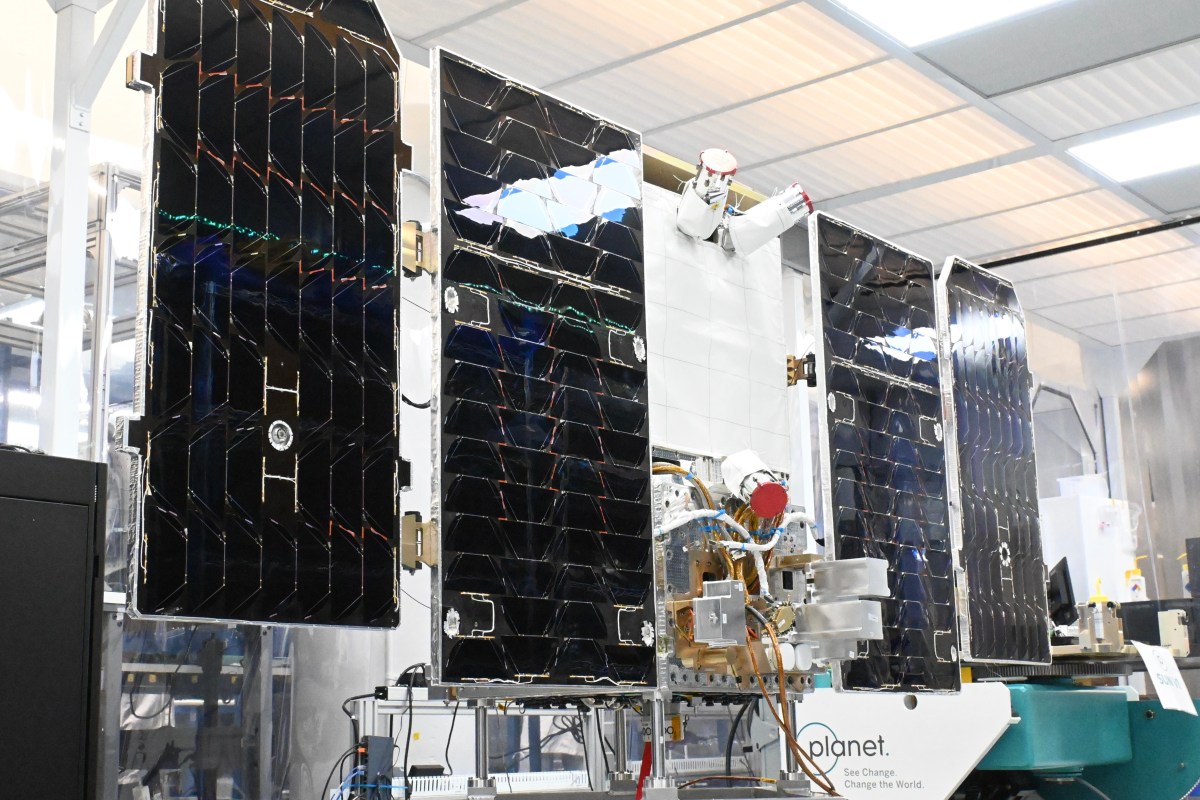
Google has taken a bold step toward the future of computing by putting a data center in orbit. The company’s Suncatcher prototype, launched on a SpaceX Falcon 9, is now online and communicating with ground stations. Equipped with four Tensor Processing Units (TPUs) and a pre‑loaded DeepMind model, the satellite not only runs AI inference workloads but also generated a haiku about its own existence, showcasing the feasibility of on‑orbit AI services.
How Suncatcher Works
The Suncatcher satellite is a compact, solar‑powered platform that can generate up to 1 kW of electricity. Its four TPUs are powerful AI accelerators, but because of the limited power budget, only one TPU can be active at a time for roughly 20 minutes before the system cycles to another chip. This constraint drives a careful scheduling of inference tasks and highlights the challenges of balancing compute intensity with the modest energy available in low Earth orbit.
Key hardware features
- Four Google TPUs – Designed for high‑throughput inference, each chip can execute large language models and vision models with low latency.
- 1 kW solar array – Provides enough power for a single TPU and supporting subsystems, but not for simultaneous multi‑chip operation.
- Radiation‑hardened design – The hardware has been tested in particle accelerators on Earth, but the satellite will now face the real space radiation environment, where bit flips and memory corruption are a concern.
First AI Output: Space‑Inspired Poetry
During the initial commissioning phase, engineers sent a prompt to the on‑board Gemma 4 model, asking it to compose a haiku about being in space. The model responded with:
Blue marble below\ Data streams in silent grace\ Starlight feeds my core.
While the poem is a light‑hearted demonstration, it serves a practical purpose: verifying that the model can receive input, process it, and return output over the satellite‑to‑ground link. The test also confirmed that the communication subsystem can handle the modest data rates required for inference results.
Why Test TPUs in Orbit?
Running AI workloads in space opens new possibilities for low‑latency services that are geographically close to users, especially for applications like real‑time image analysis from Earth‑observation satellites or autonomous vehicle edge computing. However, the harsh environment introduces unique risks:
- Thermal stress – Rapid temperature swings can affect chip performance and reliability.
- Radiation exposure – High‑energy particles can cause single‑event upsets, leading to bit flips that corrupt model weights or inference results.
- Power constraints – Limited solar generation forces careful power budgeting and may limit the duration of intensive tasks.
Google’s ground‑based tests suggested that inference workloads would be resilient, but the Suncatcher mission will provide empirical data on how these factors interact in orbit.
Looking Ahead: The Next Generation
If the prototype demonstrates stable TPU operation and acceptable error rates, Google plans to launch two additional satellites in 2027. These follow‑on units will feature:
- Higher power generation – Larger solar arrays to support longer TPU activation periods.
- Inter‑satellite optical links – Laser communication to enable distributed processing across a constellation, allowing more complex workloads to be split among multiple nodes.
Such a network could underpin a space‑based AI infrastructure that complements terrestrial data centers, offering ultra‑low‑latency access for remote or mobile users.
Practical Takeaways
- Proof of concept achieved – The successful haiku generation confirms that AI inference can be performed on a low‑Earth‑orbit platform.
- Hardware limits matter – Power budgeting remains a primary constraint; future designs will need more efficient energy harvesting or lower‑power AI accelerators.
- Radiation testing is essential – Real‑world orbital data will inform how to harden AI chips for long‑term deployment.
- Strategic partnerships matter – Google’s collaboration with SpaceX and its investment stake in the launch provider illustrate how integrated supply chains are crucial for ambitious space‑AI projects.
Conclusion
Google’s Suncatcher satellite marks a tangible step toward a future where AI workloads are no longer confined to ground‑based data centers. By demonstrating that a space‑borne TPU can run a language model and produce coherent output, the mission validates the technical premise of orbital AI services. The upcoming data on thermal performance, radiation effects, and power management will shape the design of the next generation of space data centers, potentially redefining how and where compute power is delivered.
Source
Read original sourceWhy we picked this
Launch of a space-based TPU running a Gemma 4 model, core AI development