Connecting AI agents to enterprise knowledge
AI agents succeed when enterprises build a knowledge layer—linking data to semantic, episodic, and procedural context—overcoming fragmentation and privacy challenges to move from pilot to production.
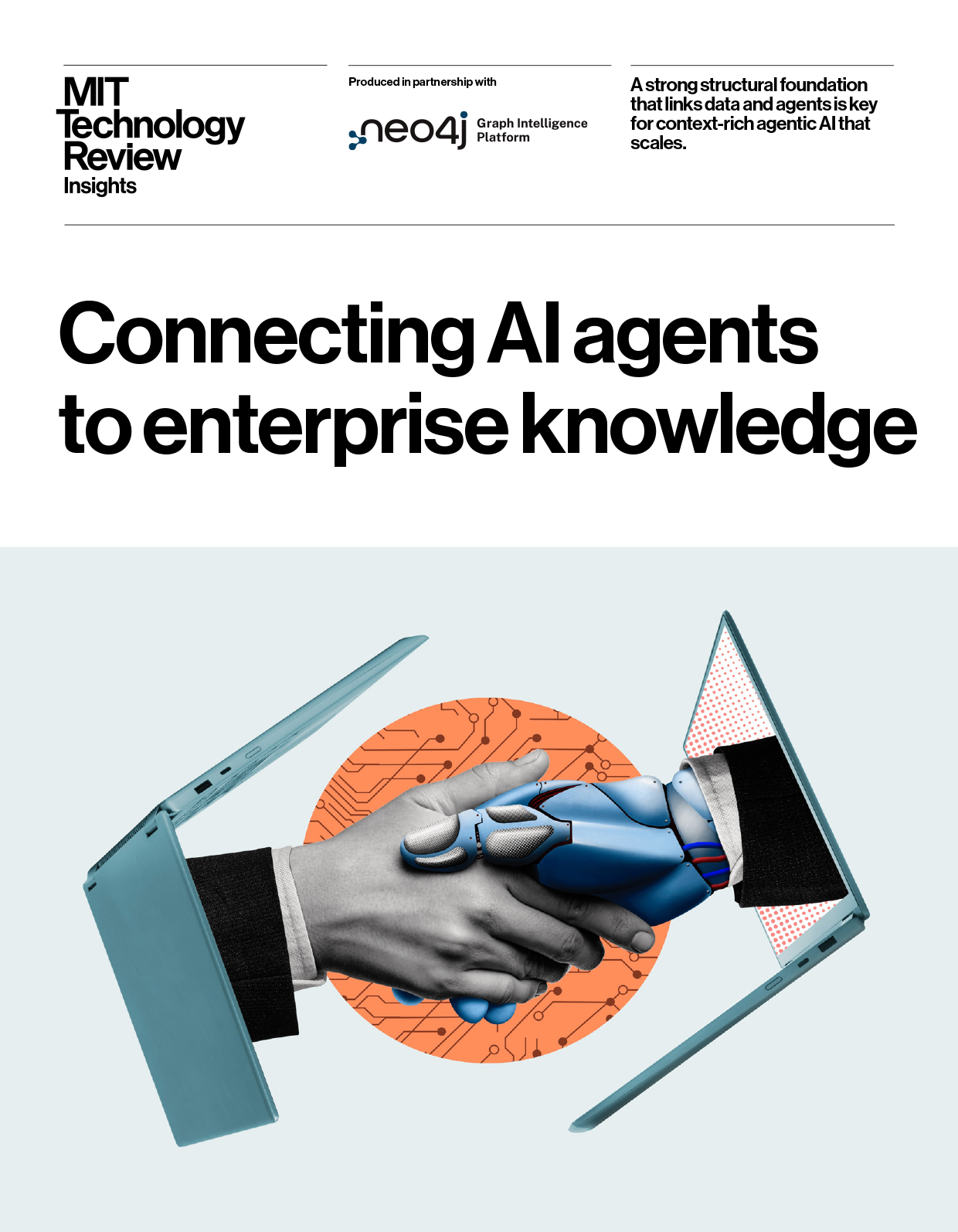
Connecting AI Agents to Enterprise Knowledge
Artificial‑intelligence agents promise to automate routine tasks, surface insights, and even make decisions. Yet in practice, only a fraction of projects reach production. The gap is not in the models themselves but in the knowledge that fuels them. Enterprise data is vast, but without a contextual understanding of what that data means within a company’s processes, agents can misinterpret signals, violate compliance rules, or simply fail to act.
Why Knowledge Matters More Than Raw Data
Data alone is a collection of numbers and text. Knowledge is the meaning behind those numbers—how they relate to products, customers, regulations, and internal workflows. When an agent receives a request, it must map that request onto the right data, interpret it in light of past decisions, and know the steps required to execute an action. Without this semantic, episodic, and procedural grounding, the agent’s outputs become noisy or unsafe.
A recent survey of 300 technology executives found that only 34 % of agent projects make it past the pilot stage. The leading causes of failure were legacy data systems, security and privacy concerns, and a lack of contextual knowledge. Firms that achieved higher production rates (up to 61 %) consistently reported stronger semantic knowledge capabilities—meaning they could translate raw data into business‑relevant concepts.
The Three Pillars of Agentic Knowledge
- Semantic Knowledge – The ability to label and relate data entities (e.g., customer, invoice, compliance rule). This is often achieved through ontologies or knowledge graphs that encode business rules and relationships.
- Episodic Memory – A record of past interactions and outcomes, enabling the agent to learn from precedent and avoid repeating mistakes.
- Procedural Knowledge – Explicit instructions or workflows that the agent can follow to complete tasks, such as a step‑by‑step approval process.
Organizations that invest in all three pillars create a knowledge layer that sits between raw data stores and the AI models. This layer acts as a translator, ensuring that the agent’s reasoning is grounded in the company’s reality.
Overcoming Fragmentation and Privacy Hurdles
Data fragmentation—when information is siloed across disparate systems—was cited by 55 % of respondents as a top barrier to agent success. Fragmentation not only hampers retrieval but also dilutes the quality of the knowledge layer. The solution is to build unified ingestion pipelines that feed into a central knowledge graph, enriched with metadata and provenance.
Security and privacy concerns, especially among production leaders, were highlighted by 72 % of respondents. To address this, enterprises can adopt retrieval‑augmented generation (RAG) techniques that keep raw data on‑premises while allowing the model to query only the necessary snippets. Coupled with fine‑tuned access controls and audit trails, RAG ensures compliance without sacrificing performance.
Practical Steps to Build a Knowledge‑Enabled Agent
- Map Your Data Landscape – Conduct an inventory of data sources, identify overlaps, and document business rules that govern each dataset.
- Create a Knowledge Graph – Use graph databases to model entities, relationships, and constraints. This becomes the semantic backbone for your agents.
- Develop Ingestion Pipelines – Automate the flow of data into the graph, ensuring that updates are reflected in real time.
- Implement Retrieval‑Augmented Generation – Combine RAG with your knowledge graph to provide context‑aware answers while preserving data privacy.
- Embed Episodic and Procedural Layers – Store past agent interactions and codify workflows so that agents can learn from history and execute tasks reliably.
- Iterate with Human‑in‑the‑Loop – Start with supervised evaluation, gradually shifting to autonomous decision‑making as confidence grows.
By following these steps, organizations can move from ad‑hoc pilot projects to robust, production‑ready AI agents that deliver consistent value.
Closing Thoughts
The promise of AI agents hinges on more than powerful models; it depends on a solid foundation that connects data to meaning. Enterprises that invest in semantic, episodic, and procedural knowledge—while tackling fragmentation and privacy—will unlock higher production rates and stay ahead of competitors. The next wave of AI adoption will be defined not by the size of the model, but by the depth of the knowledge layer that powers it.
---
TL;DR: AI agents succeed when enterprises build a knowledge layer—linking data to semantic, episodic, and procedural context—overcoming fragmentation and privacy challenges to move from pilot to production.
Source
Read original sourceWhy we picked this
Explores AI agents and enterprise knowledge, core AI content.