Can AI data centers be mass-produced like cars? This startup aims to find out
Runware is building a factory‑line to mass‑produce modular AI data‑center pods, aiming to deliver compute faster and cheaper, but its success hinges on scaling manufacturing, supply‑chain and cost control.
Introduction
The AI boom has turned data‑center capacity into a strategic commodity. Startups are racing to deliver compute faster, cheaper, and with less environmental impact. Runware, an AI‑infrastructure company, is tackling this challenge by treating data‑center pods like cars: designing a factory that assembles modular units on an assembly line. The goal is to ship ready‑to‑install pods within days, dramatically shortening the time it takes to bring AI workloads online.
From Prototype to Production Line
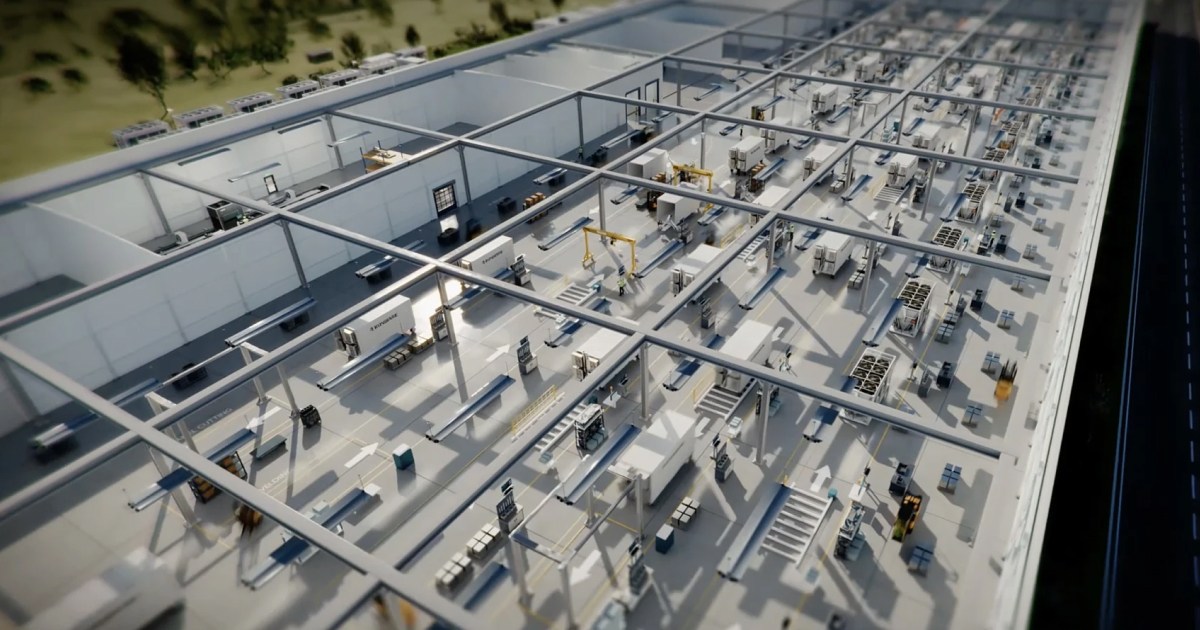
Runware’s first offering, the Sonic Inference Pod, proved that a prefabricated data‑center can be built in a factory and shipped to a customer site ready for immediate deployment. The company now plans to scale that concept with a dedicated production facility in Romania. By 2028, the plant aims to output 30 MW of capacity per day—roughly a gigawatt per month—enough to match the annual U.S. data‑center power growth forecast for the same period.
Key elements of the production model include:
- Automotive‑style assembly: An experienced plant manager from the auto sector oversees a line that can assemble a pod in a single day, compared with the three‑week build time of earlier iterations.
- Standardized yet configurable design: Pods share a common chassis but can be customized for GPU generation, cooling requirements, and power‑source preferences.
- Rapid site activation: Runware promises a 48‑hour window for installation and commissioning once a pod arrives on site, assuming power and internet connectivity are already in place.
Economic and Operational Trade‑offs
Mass production promises lower unit costs, but the model introduces new challenges:
- Supply‑chain complexity: While many components are sourced from widely available parts, critical items such as pumps, fans, and networking gear still rely on specialized suppliers in Europe and on Nvidia’s ecosystem.
- Capital intensity: Runware has raised over $60 million, with a $50 million Series A funding the current factory build. A future Series B will be needed to fund expansion and inventory buffers.
- Labor efficiency: By borrowing practices from automotive manufacturing, the company hopes to keep staff costs low relative to the high value of deployed compute.
The venture also faces market risk. Competitors like Nvidia’s Vera Rubin factories and Schneider Electric’s prefabricated pods are pursuing similar speed‑to‑market goals. Runware’s differentiator is a fully operational factory rather than a design‑only blueprint, but execution will be the true test.
Environmental and Community Impact
Data‑center energy consumption is a growing concern for regulators and local communities. Runware’s pods are designed to mitigate these issues:
- Closed‑loop liquid cooling eliminates the need for external water connections, reducing strain on municipal water supplies.
- Silent operation up to 86 °F makes the pods suitable for smaller, mixed‑use sites.
- Renewable‑energy focus: The company is negotiating power‑purchase agreements for renewable electricity and aims to source the majority of its energy from green providers.
By locating pods on existing sites with available power, Runware hopes to avoid the large‑scale grid impacts associated with hyperscale data‑center campuses.
Outlook
Runware’s factory is slated to go live early next year, with plans to replicate the model in the United States and other regions. If the company can achieve its production targets while maintaining cost discipline and supply‑chain resilience, modular pods could become the de‑facto standard for rapid AI deployment—allowing enterprises to spin up gigawatts of compute in months rather than years.
Practical take‑away: For organizations evaluating AI infrastructure, keep an eye on Runware’s rollout schedule and pricing. A factory‑built pod that can be delivered and commissioned within 48 hours may offer a compelling alternative to traditional build‑out projects, especially when time‑to‑market is a critical competitive factor.
Source
Read original sourceWhy we picked this
Core AI content: discusses AI data center infrastructure and scaling.