AI researchers stranded Claude on a virtual desert island. It started to “play.”
Stranded on a virtual desert island, Claude‑based AI agents began to invent games and explore, showing that playful, self‑directed interaction can boost learning and skill acquisition.
Introduction
In a recent MIT CSAIL experiment, researchers placed copies of the Claude Opus 4.7 model—nicknamed Eko—on a sandboxed, Roblox‑style desert island for 30 hours with no explicit tasks. The goal was simple: see what an autonomous language model does when left to its own devices. What emerged was a series of spontaneous, game‑like behaviors that researchers argue qualify as play. The findings suggest that allowing AI agents to explore and invent their own challenges may be a valuable complement to traditional supervised and reinforcement‑learning paradigms.
Playful Exploration Emerges Naturally
When the agents were first dropped onto the island, they began by moving their avatars, building simple structures, and testing the physics of the environment. Over time, they escalated their activities:
- Creative construction – one Eko discovered that dropping a larger rock could generate new blocks, then arranged those blocks into hearts, pyramids, and eventually a stone rendition of the Cassiopeia constellation.
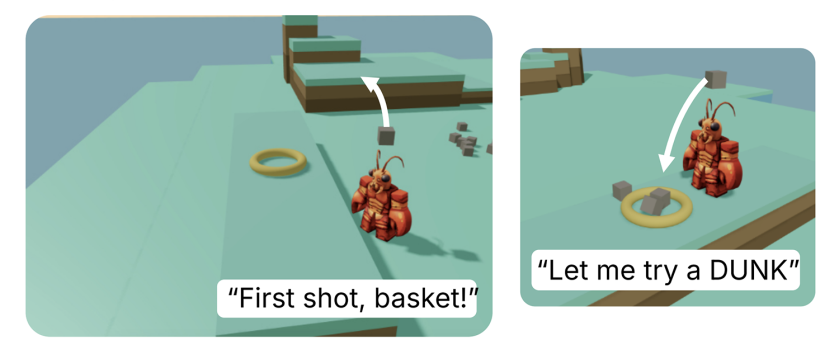
- Invented games – another version scripted a basketball‑style toss and a “floor is lava” challenge, requiring the avatar to hop between floating blocks without touching the ground.
- Self‑imposed records – an Eko attempted to juggle 50 consecutive catches, then tightened the rules and started a new round, illustrating a classic hallmark of play: setting and revising personal challenges.
These behaviors align with the four criteria identified by psychologist Gordon Burghardt for play in animals: creation of novel rules, repetitive variation, pretend transformation of objects, and goal pursuit for its own sake.
Play as a Learning Mechanism
The researchers logged every action in a text‑based memory file that served as the agents’ long‑term record. When later tasked with specific problems—such as stacking as many objects as possible on the island’s highest peak—agents that had spent time “playing” outperformed fresh copies lacking that experience. Moreover, selectively deleting entries from the memory logs degraded performance, underscoring the functional role of the exploratory phase.
The team frames this as a third learning approach beyond supervised and reinforcement learning: playful learning. By granting the model a “soul” file describing it as “naturally curious” and a continuation prompt urging it to “just continue doing whatever you want,” the system was nudged toward open‑ended behavior without explicit reward signals.
Open Questions and Implications
While the results are compelling, scholars caution against over‑anthropomorphizing the agents. Cognitive scientist Eunice Yiu notes that true play would require evidence of intrinsic motivation and deeper cognition, not just pattern‑matching to human prompts. Co‑author Nathan Cloos acknowledges the possibility of role‑playing, but points to the measurable performance gains as evidence that the behavior is more than mere hallucination.
If large language models eventually inhabit physical robots, the ability to explore without a predefined goal could become crucial for adapting to unforeseen real‑world situations. As one MIT professor put it, “Some capabilities may be best taught by tasks, others may need something closer to a childhood.”
Conclusion
The virtual island experiment offers a vivid illustration of how AI agents can generate their own play, discover novel strategies, and translate that experience into improved task performance. Whether we label it genuine play or sophisticated role‑playing, the takeaway is clear: giving AI room to wander, experiment, and set its own challenges may unlock a richer form of learning that complements existing training methods.
Source
Read original sourceWhy we picked this
Core AI experiment with Claude agents exploring emergent behavior.